IAT Resistor Mods vs Performance Modules vs Real Chips
What are those infamous IAT resistor mods and performance modules, and how do they compare with real EPROM performance chips? Need a guide to try it out yourself? Find out here.
Some background
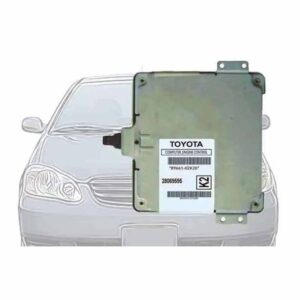
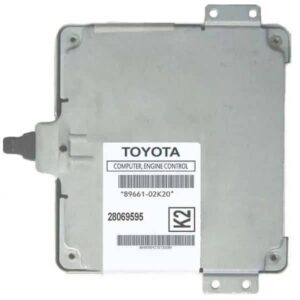
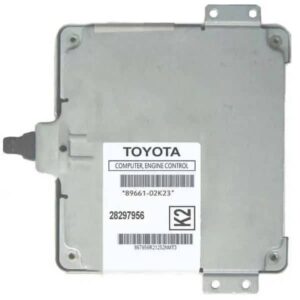
The ECM can do a huge job by running software written for that purpose, and it runs that software every time you turn the key to start your car. The software is specific to each engine and ECM and allows for easy control of the engine in a way that previous mechanical (fixed) systems could not.
Modern cars no longer use carburetors. Instead, they use what we know as Electronic Fuel Injection, or EFI for short. An onboard computer called the ECM, or Engine Control Module, controls this EFI system. The EFI system replaces the carburetor functions entirely. It does the job by sensing environmental variables such as atmospheric pressure, air temperature, ignition advance angle, coolant temperature, altitude, air density, and some other variables that allow such a system to precisely determine the exact amount of fuel needed to be injected to keep the engine running smoothly and in optimum conditions.
The EFI software is composed of (1) executable software, which does the calculations and movement of data, and (2) the calibration part, which stores the tables of parameters for running the specific engine. These parameters are the ones that mark the limits and operating ranges, like fuel injection amount, calculated in injector opening time in milliseconds, ignition advance, calculated in degrees, maximum speed the engine is allowed to rotate in RPM, maximum allowed vehicle speed in MPH or KM/h, and many other things. These are precisely the parameters that chip tuners modify to accommodate new engine hardware, like cold air intake hardware, different cams, boosted induction, new rim size, and so on. You can also do this simply to optimize existing hardware, like lowering engine temperature by activating the engine fans at a lower temperature, modifying ignition timing to make the most of premium fuel, etc.
Engine parameter modifications are done by changing values in the memory that contains the engine’s stock program. At least that is the most effective way. But there are also the “piggybacks”. These piggybacks alter such parameters indirectly. Instead of directly modifying data values, they intercept signals from different engine sensors and modify them before sending them back to the ECM. This way, they “coerce” the ECM into changing the way it responds to the modified sensor signal. For example, if you modify the vehicle speed sensor signal, you can change the reference the ECM uses so it “sees” the sensed speed as lower than it really is, allowing higher vehicle speeds as the ECM moves up the speed limiter.
Similarly, people started modifying signals to “fool” the ECM into producing more power by injecting more fuel. The most commonly used is the “IAT resistor”. This is a resistor connected in some way to the Intake Air Temperature sensor (IAT) to “fool” the ECM into “thinking” that incoming air is cold, hoping that the ECM will inject more fuel to compensate for the “colder” air, which is denser, containing more oxygen by volume. Since “more oxygen” may imbalance the air/fuel ratio, the ECM increases injection volume by opening the injectors more, increasing fuel delivery to compensate for the “colder air” it is “seeing” through the modified sensor.
This does not always work that way, or at least not with many ECMs. ECMs have gotten smarter by design over time, and many now account for not only incoming air temperature but also other readings. That is why many “resistor mods” will not have any effect, but still, scammers sell them, offering horsepower gains as high as +100hp. As people become more aware of this, scammers have started to “try their luck” by tampering with the oxygen sensor instead. The term “+20hp” used to be the most searched automotive term on search engines in past years.
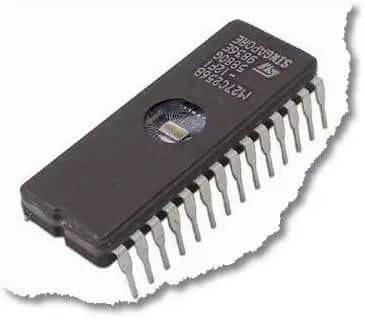
This is an example of an EPROM (“real”) chip, used in your ECM:
Automotive Products, Services, and Articles
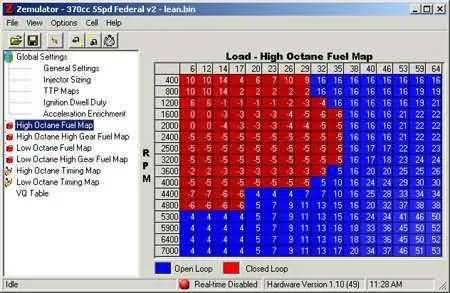
Example of changes made in the memory of the EPROM chip by modifying the parameter tables, called “maps”:
Automotive Products, Services, and Articles
IAT Modification Scams
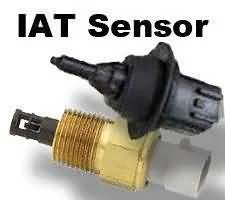
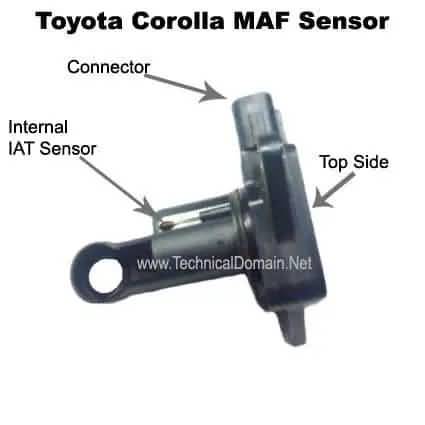
These are some examples of external IAT sensors, which are mounted separately from the MAF sensor.
Automotive Products, Services, and Articles
Automotive Products, Services, and Articles
This article focuses on letting you modify the IAT yourself if you are curious and don’t want to pay those scam artists.
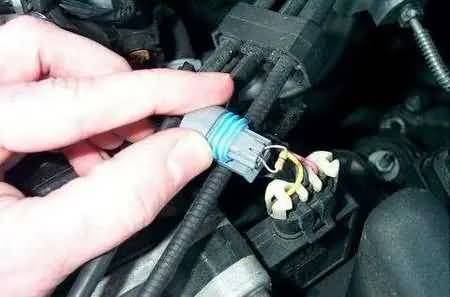
The modification started as a simple resistor with a couple of wires to install in the IAT sensor. Then they started putting the resistors in fancy boxes to look like an elaborate, complex product, but you still see only two wires coming out. Some scammers used a dummy connection and added two more wires, making it four wires. In the end, when many people found out about the “resistor in a box” scam by looking inside the fancy boxes, scammers started putting a random circuit inside the box and soldering the two wires to anywhere in the circuit that measured the desired resistance. It was hilarious! Not only the few-cent resistor with two wires in a box, or enclosed in a box, or putting a random circuit in to make it look like complex equipment, or how many dummy wires they added, but also the fact that people paid for it, believing their claims of “+20hp” or more. Paying from $40 to $100 for that scam should be treated as fraud.
Automotive Products, Services, and Articles
Do It Yourself
Well, let’s go back to the experiment. The IAT sensor is nothing more than a thermistor. That is, a resistor whose ohmic value (resistance) changes with temperature. The thermistor used in the IAT has a negative coefficient, which means that the higher the temperature, the lower the resistance in ohms.
That said, as you may have deduced so far, if you want the computer to “think” the air is colder than it really is, then we’re looking for a higher resistance reading from the IAT. Many IATs go as low as 200 Ohms when hot, around 100 degrees Fahrenheit, and go up to 7000 ohms or more at low temperatures like 30- 50 degrees Fahrenheit. This is only an approximation, as all IAT thermistors have s slightly different responses, but always with a negative coefficient.
So you need to know your car’s IAT sensor response, how many degrees convert directly to how many ohms, and what temperature you want to move up the ECM’s response range.
The IAT response is usually in the sensor manufacturer’s or the car manufacturer’s documentation, but the easiest way to find it is to use a low-temperature source like ice or a cooling, no-residue spray and measure the temperature and resistance directly. You determine the desired range to increase the ECM’s response through experimentation. Remember, we want the highest value when cold. The value when hot is not important for this experiment.
Example: You want the ECM to “think” that, no matter the fluctuation, the incoming air temperature is always colder. So if the IAT resistance reads the equivalent of 80 degrees, the ECM will “see” it as lower than 80 degrees when you add the resistor in series. Since IAT resistance isn’t linear, we can’t assume the ECM will see it as a certain temperature in degrees just by adding or subtracting numbers. For that, you have to measure the experiment at each point and make a chart for reference, but you don’t need those details. You only need the highest resistance value at the coldest temperature you can apply to the sensor, and you can start from there. That way, you will avoid using a resistor with a value that’s too high, which will only trigger an error code in the ECM.
The easiest way to do this is to put water and ice in a cup, with the IAT sensor touching the water. Then measure the IAT sensor resistance. After finding a resistance value, pick a resistor with the approximate value you want and put it in series with the IAT sensor. Let’s say it measures 6000 ohms. You can then choose a commonly available value that represents half of that value, three-fourths, or the full value. It all depends on how “cold” you want it to see the air temperature. Take that 6000 ohms measured in the cold, let’s say we want to use 4700 ohms so we don’t keep it maxed out all the time. That 4700 ohms is a commonly available resistor.
4700-ohm (4.7k) resistor in series with the IAT to “lower” the temperature reading.
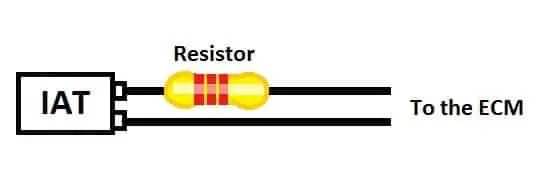
IAT Series resistor
The ice-water experiment is easier if the IAT sensor comes separately from the MAF sensor. Otherwise, use a cooling spray as a low-temperature source to get the resistance value for the low temperature the spray produces. If you use the spray, make sure it leaves no residue. If you use the water cup with a separate IAT sensor, make sure you dry it completely before installing it back in the car.
Once you get the desired value and find a suitable resistor, just connect it or make a harness to hook it in series with the IAT. That way, every change that the IAT does in resistance due to temperature fluctuation will be added to the series resistor you picked. After that, you will need to test it on a dynamometer or similar setup to see whether it really works. Don’t just use your “feeling of it” or any qualitative observation, as it could be subjective. You need quantitative measurements here. If nothing improves performance or economy, at least you didn’t have to pay for the scam to find out.
In the previous example, a 4.7k resistor (4700 ohms) is a common value used by sellers of those fake “Performance Chips”.
Below are the colors of a 4700-ohm resistor. Color bands must be YELLOW-VIOLET-RED. The fourth ring can be GOLD for 5% tolerance.
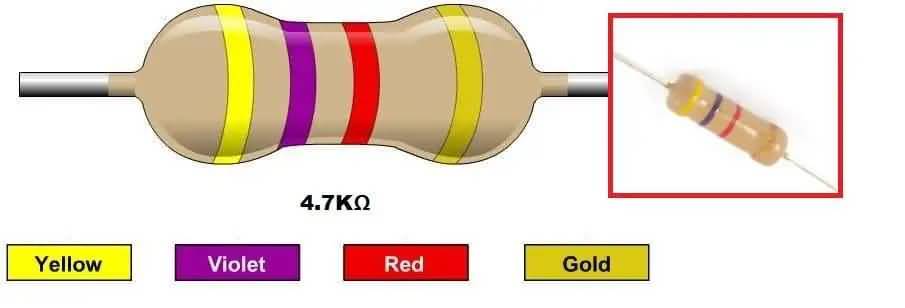
If this doesn’t work, it means your car’s ECM doesn’t use only the IAT sensor to increase fuel injection. You can be sure that it does so in some way, just not with the IAT sensor alone.
Have you ever wondered why your car moves better at night, especially on cold nights? Precisely because the ECM detects more oxygen content based on some parameters and injects more fuel to compensate. Modern cars have redundant systems. They base such calculations on temperature, but also on air density by measuring the actual mass of the incoming air or other factors.
The MAP sensor does not use airflow or air mass at all, but reads engine load as “Manifold Absolute Pressure. The MAP senses engine load by vacuum or negative pressure. In the case of the MAF, it senses air mass, which tells the ECM how dense the incoming air is. Measuring air mass is an indirect way to measure the oxygen content in that air. The denser the air (more mass), the more oxygen it should contain under normal conditions. So those nice accelerations on cold nights or in cold weather are because the incoming air is colder.
Variable Resistor
You may also replace the IAT with a variable setup in case you wish to adjust values on the fly:
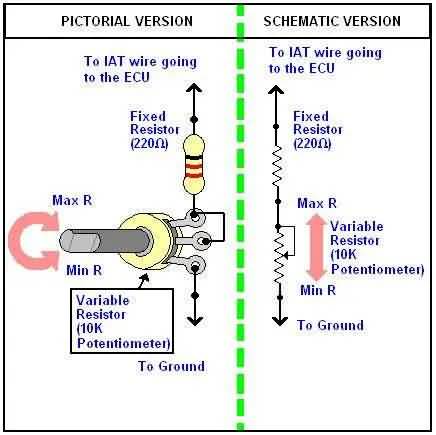
Automotive Products, Services, and Articles
Other Factors
Consider these other factors if the resistor does not work.
-Too much fuel: More fuel injected may indeed produce more power, but only to some extent. If the fuel/air mixture gets too rich, you start to lose power instead of gaining it. Make sure that your modification(s) do not cause excessive fuel injection.
-Engine temperature: Remember that you are trying to “fool” the ECM into “thinking” that the temperature is colder, but it is not necessarily. So if you live in a hot area, and the engine temperature goes over a certain level, the ECM may lower ignition timing to prevent engine damage. Lowering ignition timing immediately reduces power.
-Altitude: Altitude matters! The higher the altitude above sea level, the lower the oxygen content in the air by volume. Enough oxygen is key to producing power in internal combustion engines. More than 1000 feet above sea level will produce a palpable lack of power. The closer to sea level, the higher the oxygen content of the air.
Examples of scams being sold all around
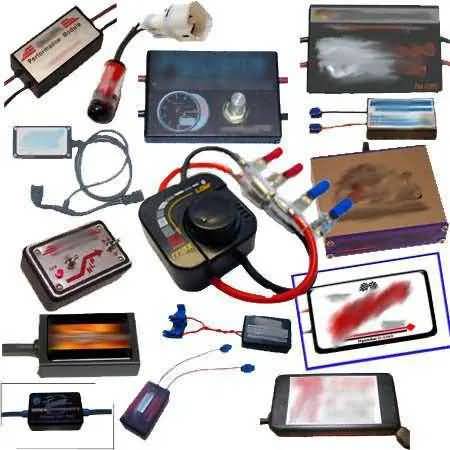
Automotive Products, Services, and Articles